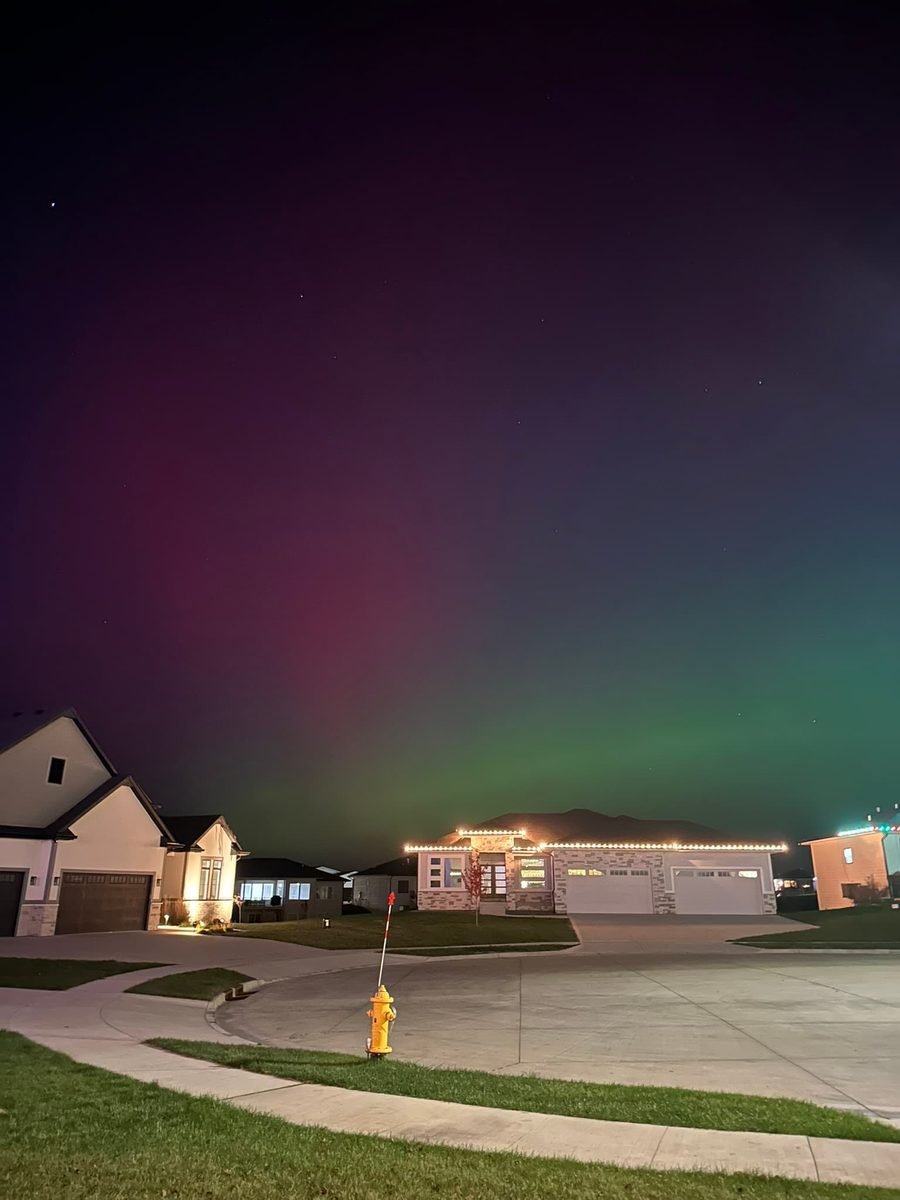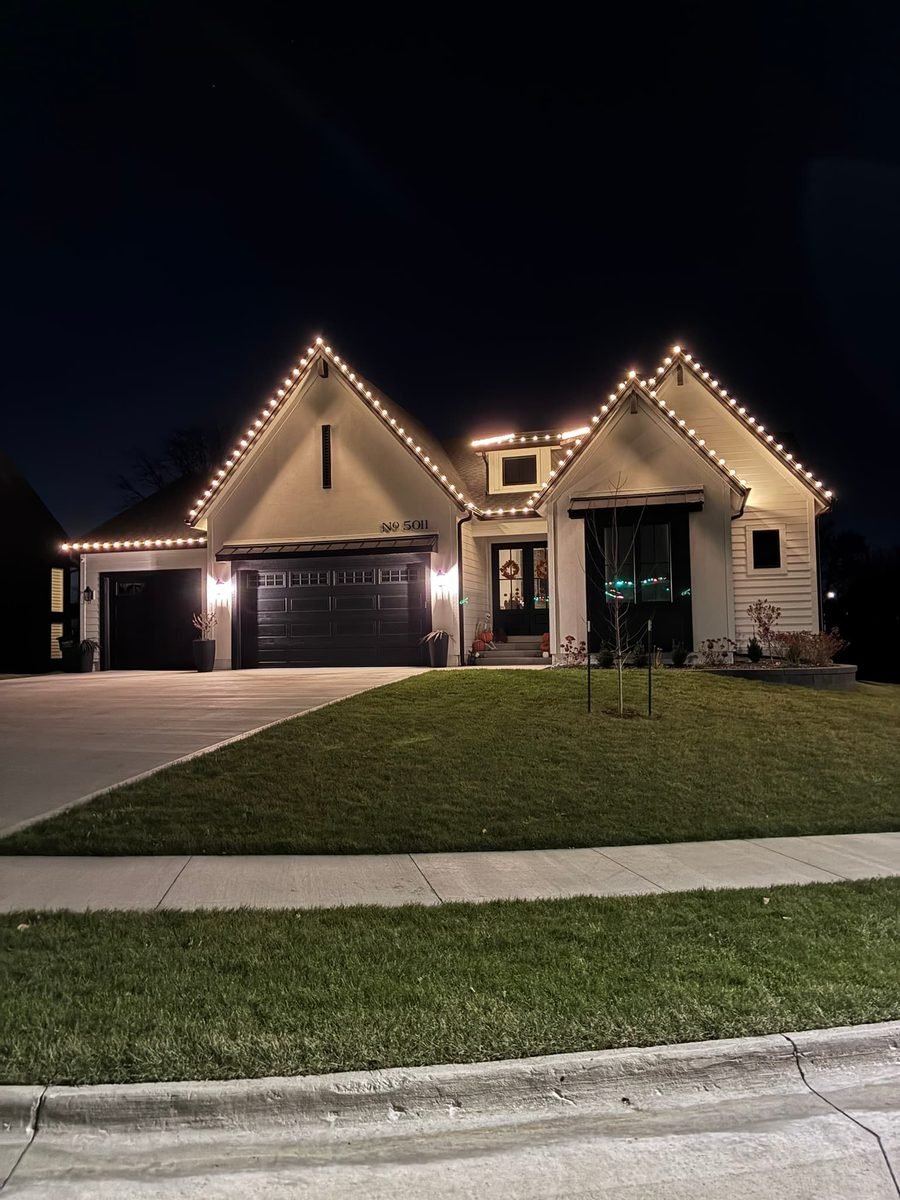
To avoid notices or fines from a Homeowners Association (HOA), check your neighborhood covenants for rules on installation dates, removal deadlines, allowed bulb colors, and permanent track lighting before putting up Christmas lights. Most HOAs mandate that holiday displays go up no earlier than late October or early November, come down by mid-January, and use attachment methods that do not leave permanent marks on the house.
Hanging holiday lights in a planned community in the Des Moines metro area usually means balancing personal preference with strict community guidelines. HOA boards enforce these rules to maintain a uniform look across the neighborhood and protect property values. Reviewing your specific covenants ahead of time saves money, hassle, and unnecessary tear-downs.
Where to Find Your HOA Rules on Holiday Lighting
Every HOA operates under written documents. The guidelines for holiday lighting are usually listed under decorative display policies, architectural guidelines, or general property maintenance covenants. You can find these rules in a few standard places:
- The Master Covenants, Conditions, and Restrictions (CC&Rs): This document outlines the general rules of the development. It often contains broad statements about temporary decorations and property alterations.
- Architectural Review Committee (ARC) Guidelines: These rules details specific requirements for paint colors, roof alterations, and permanent exterior fixtures. If you are considering year-round track lighting, this is where the requirements live.
- The Resident Portal or Rule Handbook: Many modern HOAs maintain an online portal with an updated rule handbook or seasonal memo specifying exact dates for seasonal light displays.
If you cannot find a dedicated holiday lighting policy, contact your HOA board or property management company in writing. Requesting clarification before buying or hanging lights prevents disputes later.
Timing Rules: Install Dates and Removal Deadlines
Timing is the most frequently enforced HOA lighting rule. Most associations set clear cutoffs for when lights can turn on and when they must come off the roofline.
When Lights Can Go Up
A standard HOA rule allows holiday decorations to be installed 30 to 45 days before the holiday. In Iowa, however, weather plays a major factor in when lights physically get installed. According to MyWild, the median date for the first freezing temperature in Des Moines is October 10. Waiting until late November to hang lights often means working on frozen rooflines and icy ladders.
To work around strict display rules, many homeowners install their lights in October while the weather is mild, but keep them turned off until the approved HOA start date. Check if your covenants restrict when lights can be physically mounted or simply when they can be illuminated. You can read more about ideal timing in this guide on when to put up Christmas lights in Iowa.
When Lights Must Come Down
HOA rules almost always mandate removal within 14 to 30 days after Christmas Day, with January 15 being a common deadline. Leaving unlit strands on the roofline into February or March is a quick way to receive a warning letter.
If severe winter weather makes early January removal hazardous, notify your HOA board immediately. Iowa winters bring ice and snow that can delay ladder work. Knowing when to take down Christmas lights helps you stay compliant while managing seasonal weather shifts.
Brightness, Bulb Types, and Color Restrictions
HOA guidelines often address light appearance to keep the street looking cohesive and to prevent glare into neighboring windows.
Allowed Bulb Colors and Styles
Some conservative associations restrict roofline lighting to warm white bulbs for a uniform appearance throughout the subdivision. Others permit multicolor displays, red and white patterns, or custom color mixes. Check whether your HOA bans multi-colored or moving displays before purchasing bulbs.
Brightness and Energy Draw
Modern holiday displays primarily use LED bulbs. According to ElectricityPlans, LED Christmas lights use approximately 80% to 90% less electricity than traditional incandescent holiday strands. In addition, research from ElectricChoice shows that a 100-bulb string of LED mini lights consumes about 7 watts of power compared to roughly 40 watts for an equivalent incandescent strand. LEDs run cooler and emit a clean light, making them the standard choice for neighborhoods with strict lighting codes.
Flashing and Animated Lights
In bright, high-density developments, fast-flashing lights, strobe effects, or automated light shows set to music are frequently restricted or flatly prohibited. If your HOA allows animated lighting, there is often a cutoff time—such as 10:00 PM—when all light movement or power must be shut off by a timer.
Attachment Methods and Damage Rules
Nearly every HOA covenants package prohibits physical damage to the exterior of the home. This rule protects siding, gutters, fascia board, and shingles from holes, rot, and rust.
- No Nails or Screws: Driving nails, staples, or screws into wood trim, soffits, or shingle edges is banned by standard HOA codes.
- Approved Clips: Plastic roofline clips that slide onto gutter lips or under shingle edges without penetrating material are standard practice. Clips attach without nails or screws wherever the roofline allows.
- Extension Cords: Cords must be run neatly along walls or ground lines and plugged into existing exterior outlets. Unsecured cords running across sidewalks or driveways create trip hazards that HOAs will flag.
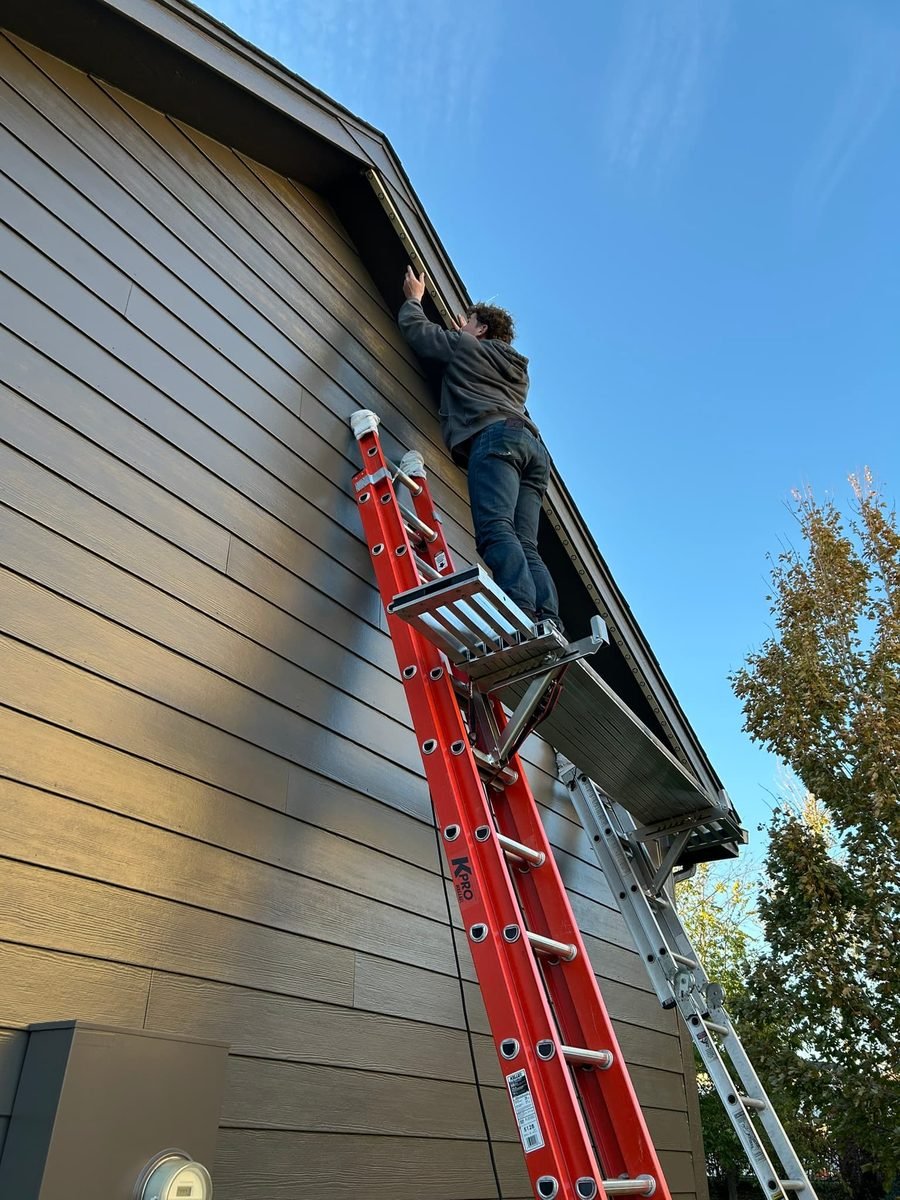
If you have a simple single-story layout, hanging your own lights with plastic clips is simple enough. However, balance the effort against personal safety. The Centers for Disease Control and Prevention notes that about 43% of holiday-decorating fall injuries treated in emergency departments involve ladder accidents. Furthermore, data from the Iowa Department of Health and Human Services shows that falls represent the leading cause of unintentional injury-related hospitalizations and emergency department visits in Iowa. Deciding between DIY vs hiring Christmas lights comes down to your home's height, roof pitch, and comfort on a ladder.
Permanent Track Lighting and HOA Approval
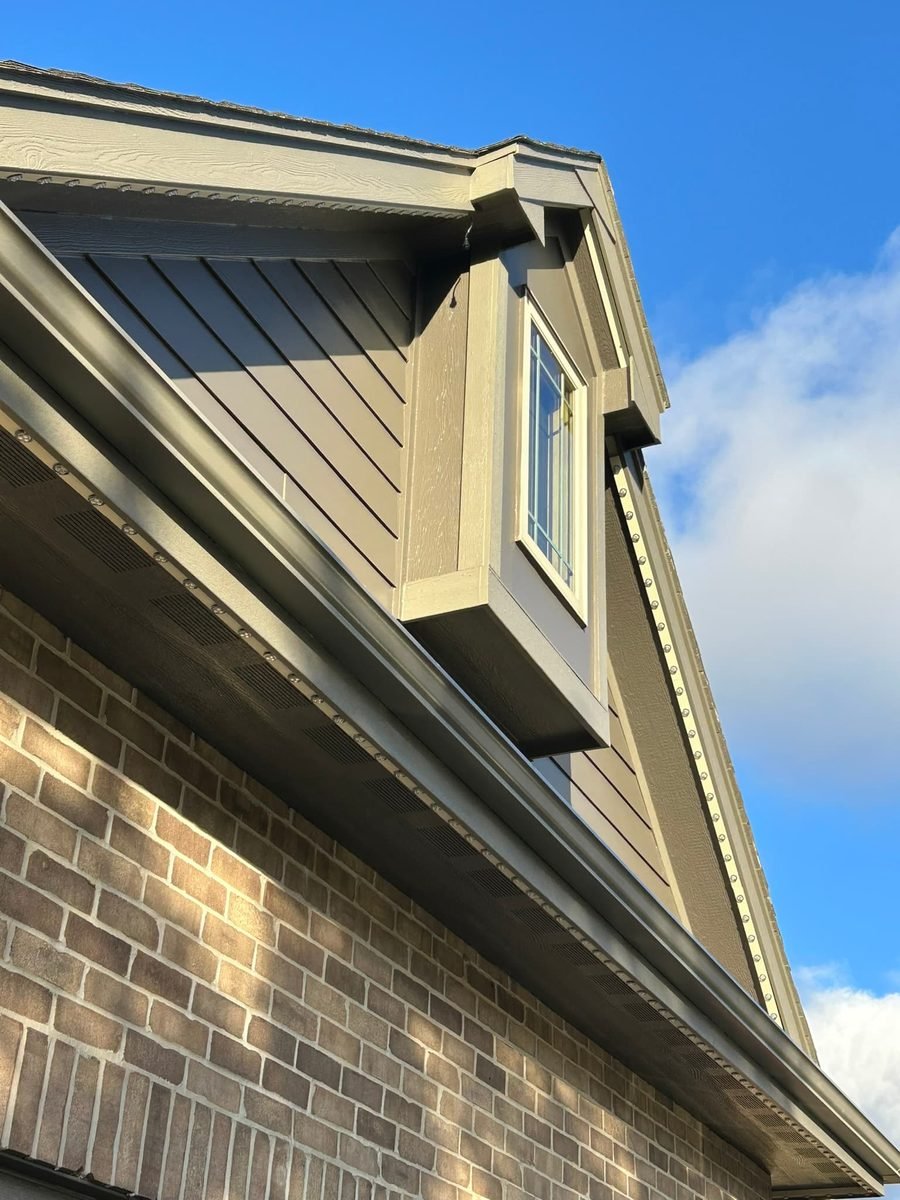
Permanent, year-round LED track lighting installed along soffits has grown in popularity. These systems sit inside an aluminum channel matched to the trim color of your home. During the day, the track is barely visible; at night, programmable LEDs light up for holidays or accent lighting.
Because permanent lighting alters the exterior of the house year-round, you must submit an architectural change request before installation in almost every HOA community.
What to Submit to the Architectural Review Committee (ARC)
When applying for ARC approval for year-round track lighting, provide the following details:
- Product Specifications: Show photos of the channel track and details on how it attaches under the soffit.
- Color Match: Provide trim samples or color codes demonstrating that the aluminum track matches your home's gutters or fascia.
- Daytime Appearance: Submit photos showing what the track looks like in daylight from the street. You can review examples on our permanent lights daytime look page.
- Usage Agreement: Assure the committee that the lights will remain off or set to neutral accent lighting outside of approved holiday periods.
If you are exploring year-round options, check our permanent lights page to see how channel systems are installed.
Summary of HOA Lighting Restrictions
| Rule Category | Typical HOA Standard | Action Required |
|---|---|---|
| Install Dates | 30 to 45 days before Christmas | Mount unlit strands early if needed; turn on only during allowed window. |
| Takedown Dates | 10 to 30 days after Christmas | Schedule removal for early January, weather permitting. |
| Bulb Colors | Warm white or controlled color schemes | Confirm allowed colors before purchasing or ordering custom strands. |
| Fasteners | No nails, staples, or screws | Use temporary plastic clips on gutters and shingles. |
| Permanent Lights | Requires ARC approval | Submit architectural request form with color-matched track specs. |
How Shimmer & Shine Lights Works Within HOA Guidelines
Shimmer & Shine Lights installs Christmas and holiday lights on homes across the Des Moines metro area, including Adel, Ankeny, Clive, Dallas Center, Grimes, Johnston, Norwalk, Urbandale, Waukee, West Des Moines, and Windsor Heights. If you are in Prairie Trail, Christmas light installation in Ankeny covers its recorded pattern book. Tate handles the estimates and manages a small crew directly.
Here is how our service aligns directly with local HOA rules:
- Non-Damaging Hardware: Clips attach without nails or screws wherever the roofline allows. The installation runs strictly from existing exterior outlets.
- Custom Color Choices: Whether your HOA mandates warm white or permits multicolor, red and white, or a custom mix, the cost remains the same.
- Flexible Roofline Options: You choose which parts of the roofline are lit. If your HOA only allows front peak lighting, we set up just the front peaks.
- Scheduled Takedown and Storage: Takedown happens in January and is included in every package. We text reminders before install day and before takedown. We store the custom-cut light set until the next October.
- Clear Agreement: A firm price is written into a signed service agreement before anything goes up. One price covers measurement, custom-cut lights, installation, seasonal maintenance fixes, January removal, and storage.
Pricing and Discount Schedule
Pricing is calculated by the foot of roofline. For the 2026 season, when booked by November 14, 2026, the rate is $5 a foot with a $500 minimum. The rate steps up on November 15 and steps up again on December 1.
The first season is full price. Signing a three-year agreement takes 20% off the next two seasons. Signing a two-year agreement takes 15% off the second season. No deposit is normally required, and payment is due when the installation is finished using cash, check, card, Venmo, or Cash App. You can read more details on our pricing page.
For a small, easy single-story roofline run, hanging your own lights is usually cheaper.
Questions People Ask
Can an HOA fine you for putting Christmas lights up too early?
Yes. If your HOA covenants define specific display window dates, the board can send warning notices and issue fines for early installation or early illumination. Check whether your rules restrict early hanging or simply early lighting.
Do permanent Christmas lights need HOA architectural approval?
In almost all cases, yes. Because permanent track lighting is mounted permanently along the roofline soffits, it qualifies as an exterior home modification. Submitting color samples showing the track matches the soffit trim usually leads to approval.
What happens if bad weather delays my HOA light removal deadline?
If ice or deep snow makes it unsafe to take lights down by your HOA deadline, communicate with your board immediately. Most boards grant written extensions for safe weather windows, especially when informed in advance.
Will plastic gutter clips satisfy HOA damage rules?
Yes. Standard holiday light clips attach over gutters or under shingles without drilling, stapling, or screwing into the building. They remove cleanly in January without leaving permanent marks or structural damage.
To get a quick price for your roofline, request a free satellite estimate at our contact page or text 515-585-9079.