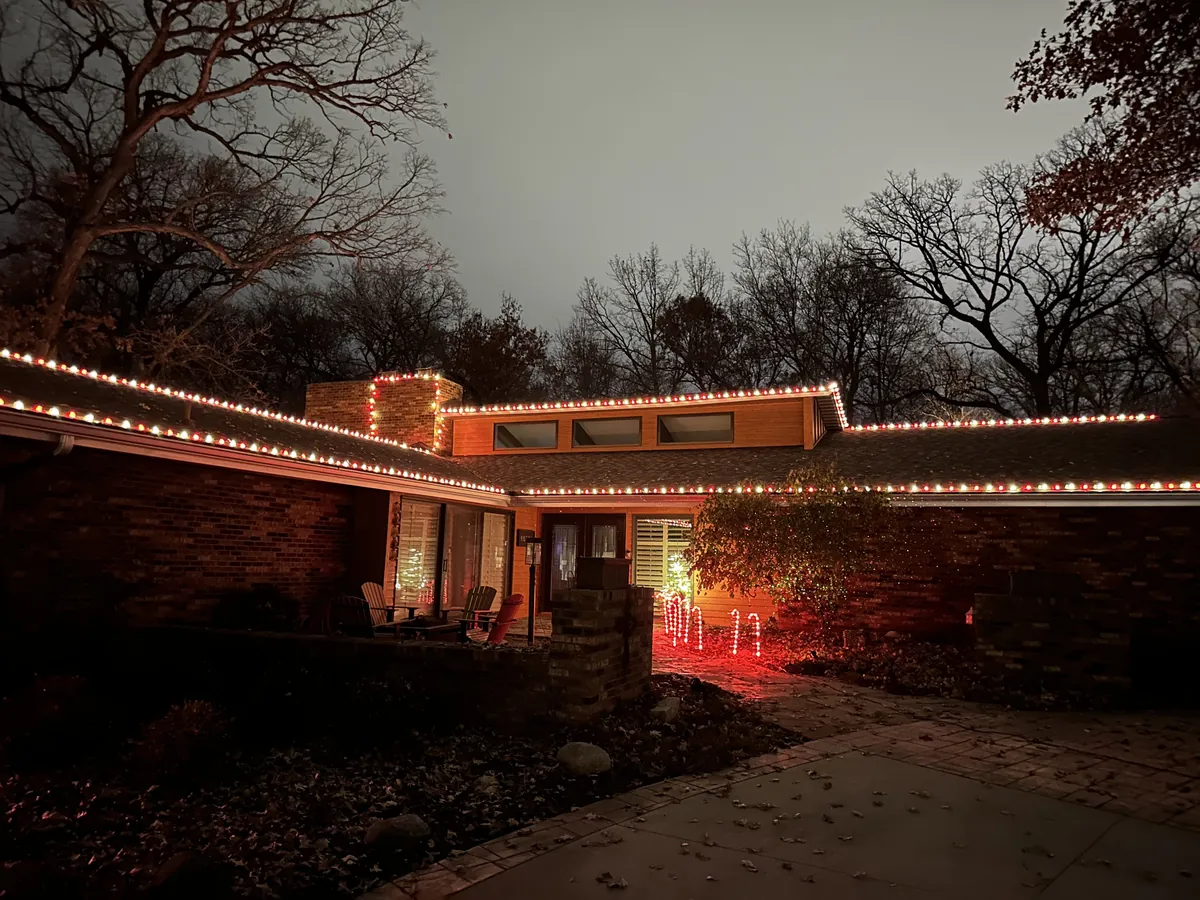
Norwalk, Iowa
Christmas Light Installation in Norwalk, Iowa
Norwalk grew faster than almost anywhere else in this metro, and most of its streets are young enough that nobody has a decorating habit yet. On a street like that, the first good roofline sets the tone for everybody.
Neighborhood By Neighborhood
Water On One Side, Fairways On The Other
Norwalk publishes its own list of neighborhoods, which is unusual and genuinely useful. It also has three golf courses inside one small city, and that changes who can see your house.
Lakewood
About 600 homes built around Lake Colchester, which is man-made. A lake means open water in front of a whole arc of houses, and open water reflects. Homes here get seen from across the lake, from angles no ladder-and-garage light job accounts for.
Echo Valley
Homes sit intermixed with the country club golf course. That means long open sightlines and back elevations that are visible to more people than a normal back yard ever is. Worth deciding on purpose whether you light only the street side.
The Legacy
Over 900 homes wrapped around 18 holes, sitting near the geographic center of the city. With that many houses in one place, a dark one gets obvious once the neighbors start.
The Founder's District and Norwalk Knolls
The oldest homes in Norwalk, by the city's own list. An older house can mean older gutters and fewer places to plug in, so Tate checks the attachment points and the outdoor outlets on your house before install day. Different job, different day.
The west side fills out with Timber View, Timber Ridge, Silverado and Blooming Heights, roughly 450 homes between them, plus Warrior Run, Windflower, Rolling Green, Brody's Landing, Holland Pointe and Hughes Century Crossing. Norwalk Central is adding 70 acres of housing, shops, trails and an amphitheatre on top of all that.
Three golf courses inside one small city is not normal, and two of them have homes built right into them. Norwalk also straddles two counties, Warren and Polk. Put those two things together and you get streets that feel nothing like a Waukee street, even though a lot of the houses went up in the same years.