The cost of permanent holiday lights depends mainly on total roofline length, layout complexity, control systems, and roof access. While temporary seasonal installation is priced directly by the foot of roofline—such as $5 a foot with a $500 minimum when booked by November 14, 2026—year-round permanent track lighting is a distinct setup that requires evaluating your specific home structure.
If you are trying to figure out what you will spend, you need to understand how installer pricing works. Every home in the Des Moines metro has different peak heights, eaves, and access points. Here is a clear breakdown of the factors that shape permanent lighting costs, how they compare to seasonal hanging, and how to get an accurate price for your house.
Key Factors That Drive Permanent Holiday Light Costs
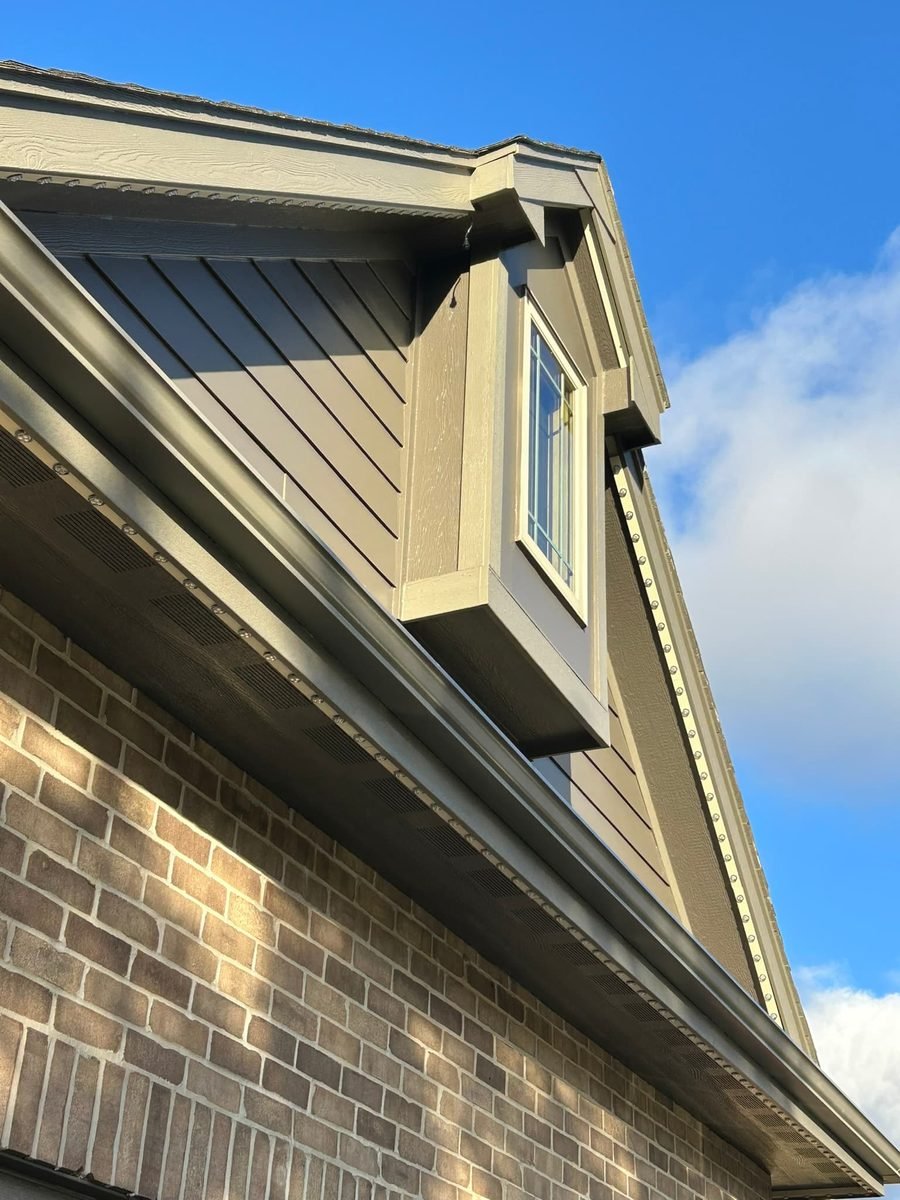
Permanent holiday lighting uses an aluminum track color-matched to your fascia or trim. Inside that track, individual waterproof LED modules sit flush against the building. Because this system stays attached to the home year-round, pricing is calculated based on materials, home geometry, and labor difficulty.
1. Total Roofline Length
The linear footage of the eaves you want lit is the primary cost factor. A straightforward setup lighting only the front gutter line uses less track and wiring than a full perimeter install covering all four sides. You can read more about how linear footage works on the pricing guide page. Choosing to light only key accent areas keeps material requirements down.
2. Roofline Layout and Architecture
A straight, single-story eave is fast to measure and fit. Complex rooflines with steep gables, dormers, multi-level peaks, or decorative trim take extra time. Fitting aluminum track around tight angles requires custom cutting and manual adjustments. More cuts and jumper wires between isolated peaks increase the labor required for the job.
3. Control Systems and Power Setup
Permanent systems connect to low-voltage power supplies plugged into existing exterior outlets. Controls range from standard timers to smart Wi-Fi controllers managed through a smartphone app. Advanced controllers let you program dynamic schedules, color patterns, and individual bulb control. Selecting advanced control hardware or adding power boosters for long runs affects the initial component expense.
4. Access and Roof Pitch
Ground conditions and height play a direct role in installation time. High second-story peaks, steep roof pitches, or ground obstacles like sloped yards and mature landscaping require careful ladder placement and extra handling. Higher or steeper sections take longer to fit neatly than low, accessible eaves.
Seasonal Lighting vs. Permanent Track Lighting
When deciding between temporary seasonal installation and year-round track lighting, understanding how pricing and long-term commitment differ helps. Shimmer & Shine Lights provides seasonal C9 light installation as well as track options outlined on the permanent lights page.
| Feature | Seasonal C9 Installation | Permanent Track Lighting |
|---|---|---|
| Mounting Method | Clips attach without nails or screws wherever the roofline allows | Color-matched aluminum track mounted under fascia |
| Pricing Structure | $5 a foot with a $500 minimum when booked by November 14, 2026 | Custom project quote based on linear feet, access, and controller options |
| Schedule & Service | Installed starting mid-October, removed in January, stored until next fall | Installed once, stays on the home year-round |
| Multi-Year Options | First season full price; 3-year agreement takes 20% off next two seasons; 2-year takes 15% off second | Single upfront installation cost for permanent hardware |
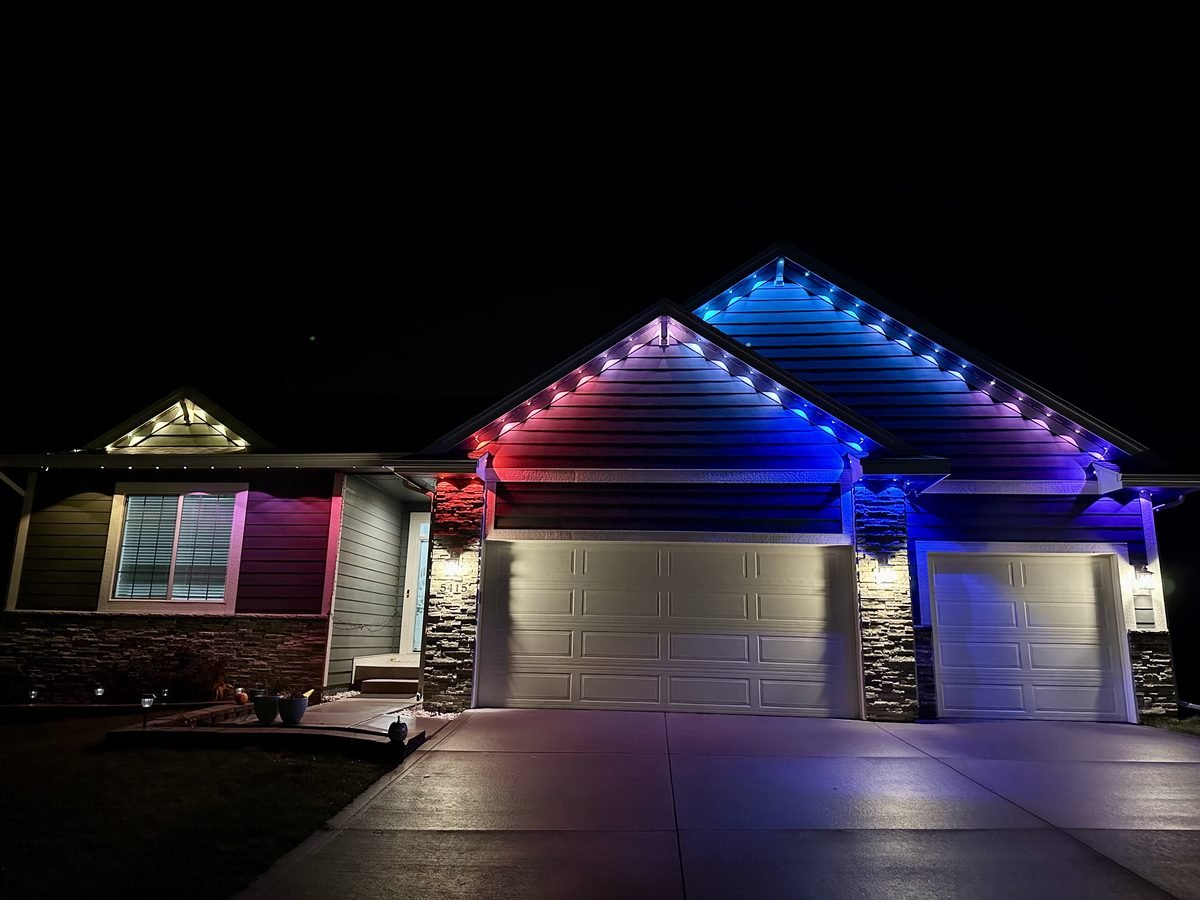
| Color Customization | Warm white, multicolor, red and white, or custom mix at no extra cost | Programmable color channels and patterns controlled via phone app |
Energy Consumption and Electric Bills
Homeowners often ask whether leaving lights plugged in or running permanent displays will drive up monthly utility bills. Modern outdoor display systems use LED bulbs, which consume very little electricity compared to older lighting technology.
According to data from the U.S. Department of Energy, LED holiday lights consume significantly less energy than traditional incandescent lights. In fact, testing published by Electric Choice demonstrates that a typical 100-bulb string of mini incandescent lights draws approximately 40 watts, whereas an equivalent 100-bulb LED string draws only 7 watts.
Because LEDs pull so little power, running outdoor lighting throughout the evening has a minimal impact on monthly electric bills. Information from the U.S. Energy Information Administration reveals that 77% of U.S. homes with outdoor lights left on all night use LED bulbs due to their efficiency.
When Doing It Yourself Makes Sense
Hiring a business to install lights is not necessary for every situation. For a small, easy single-story run, hanging your own lights is usually cheaper, and it is fine to say so. If you have a single low gutter line and are comfortable using a step stool, purchasing simple lights and hanging them yourself saves money.
Professional installation makes the most sense when homes have tall peaks, steep roofs, or complex architectural layouts that are difficult to reach safely. You can review our detailed breakdown on DIY vs hiring christmas lights to decide which path fits your home and comfort level.
Ladder work during late autumn weather brings real physical risks. Data published by the U.S. Consumer Product Safety Commission estimates there were 15,000 injuries involving holiday decorating seen in emergency departments nationwide during November and December 2012 alone. High eaves and freezing weather increase those risks significantly.
Iowa Weather and Timing Considerations
Installing outdoor lighting in central Iowa requires working around rapid fall weather changes. According to climate normals from the National Oceanic and Atmospheric Administration cited by The Old Farmer's Almanac, the average first 32°F freeze at the Des Moines International Airport occurs on October 14.
Additionally, historical data from the Iowa State University Extension shows that early autumnal frosts in Polk County historically begin as early as late September to early October. Cold weather causes frozen rooflines and slick ladder conditions, which is why seasonal installation work starts in mid-October and runs Monday through Saturday.
Booking early ensures your lights are ready before winter weather arrives. The two weeks before Thanksgiving are the busiest period of the fall season. You can learn more about scheduling milestones on our step-by-step installation process page.
How Our Estimate and Pricing Process Works
Getting a price from Shimmer & Shine Lights is simple and direct. Here is how Tate handles quotes across the Des Moines metro:
- Free Satellite Estimate: Send your property address through our site or text 515-585-9079. Tate measures the roofline using overhead satellite imagery and texts back a ballpark estimate, usually the same day. Nobody comes to the house for that step.
- In-Person Measurement: A firm price comes after an in-person measurement on site.
- Written Agreement: The exact price is written into a service agreement signed before anything goes up. A signed price is held even if general rates later rise.
- No Deposit: No deposit is required normally. Payment is due when the install is finished. We accept cash, check, card, Venmo, and Cash App.
- Service Areas: Shimmer & Shine Lights installs on homes in the Des Moines metro, including Adel, Ankeny, Clive, Dallas Center, Grimes, Johnston, Norwalk, Urbandale, Waukee, West Des Moines, and Windsor Heights.
Questions People Ask
What affects the cost of permanent holiday lights the most?
Total roofline length and installation difficulty are the two biggest factors. Homes with high multi-story peaks, steep roof pitches, or complex dormers require more labor and specialized access than a low, straight single-story eave.
Are permanent holiday lights cheaper than seasonal hanging?
Permanent lights cost more upfront because you are purchasing durable aluminum track and hardware that stays on your house year-round. Seasonal hanging has a lower initial entry price—such as $5 a foot with a $500 minimum when booked by November 14, 2026—making seasonal hanging ideal for short-term planning or lower upfront expenditure.
How do I get an exact price for my house?
You submit your property address online or by text. Tate measures your roofline using satellite software and sends you a ballpark estimate, followed by a firm written price after measuring the property in person.
Can I choose which parts of my roofline get lit?
Yes. Customers choose exactly which sections are lit. Lighting just the front peaks or main gutter line is fine and helps keep total project costs down.
To check your roofline measurements and get a ballpark figure for your home, request a free satellite estimate at /contact.php or text 515-585-9079.