Outdoor Christmas lights usually last one to several seasons. LED lights generally last longer than incandescent lights, but Iowa weather, handling, storage and the condition of the strand all affect how long they keep working.
There is no single expiration date printed on every light set. A strand that stays outside for six weeks each year has a different service life from one left up year-round. The right question is not only how old the lights are. It is how they were used, stored and checked between seasons.
Typical Christmas light life spans
For planning purposes, many homeowners can expect incandescent Christmas lights to last about one to three seasons. LED Christmas lights often last about three to seven seasons, and sometimes longer when they are handled carefully and used only during the holiday season. These are practical ranges, not promises from a particular manufacturer.
The U.S. Department of Energy says LED lights can last up to 25 times longer than incandescent bulbs. That comparison is useful, but it does not mean every LED holiday strand will last 25 seasons. Holiday lights are exposed to moisture, cold, wind, movement and repeated installation. The wiring and sockets can fail before the LED itself reaches the end of its expected life.
LED lights also use less energy. The U.S. Department of Energy reports that LED holiday lights consume 80% to 90% less energy than incandescent strands, according to information published by Avista. For most homeowners, the main life-span decision is simple: LED is usually the better choice when buying a new outdoor set.
| Light type | Practical planning range | What usually shortens its life |
|---|---|---|
| Incandescent | About one to three seasons | Heat, burned-out bulbs, brittle wire and rough storage |
| LED | About three to seven seasons | Moisture, cracked sockets, damaged wire and repeated rough handling |
The most important detail is the condition of the strand. A newer incandescent set can be usable, while an older LED set with cracked insulation or loose sockets may need to be replaced.
Why outdoor Christmas lights wear out
Cold, moisture and temperature changes
Outdoor lights deal with conditions that indoor lights do not. Rain, snow, ice and frost can work their way into weak points. Freezing temperatures make plastic and wire less flexible. Then the material expands and contracts as the temperature changes.
Des Moines weather adds a wide range of conditions during the holiday season. The Old Farmer's Almanac lists the average first fall frost in Des Moines between October 6 and October 14. That means an early installation can see cold nights for weeks before the lights are taken down. The calendar date does not damage a light by itself, but longer outdoor exposure gives weather more time to affect the materials.
Water is more likely to cause trouble at damaged spots. Look for cracked sockets, split insulation, loose caps and places where the wire has been pulled tight. Do not assume an older strand is in good condition just because it worked last year.
Sun exposure
Ultraviolet light from the sun can make plastic and wire coverings brittle over time. This matters most for lights or cords that remain outside after the season. A set that is installed in November and removed in January has less sun exposure than one left along a roofline through spring and summer.
Sun damage is not always obvious at first. The covering may look dull or feel stiff. If the wire cracks when it is moved, replacement is usually a better decision than trying to make the strand last another season.
Wind and movement
Wind moves light strands, clips and loose sections. That movement can pull on sockets and connections. A strand that hangs with tension can also put stress on the wire at corners, peaks and ends.
Repeated movement does not mean outdoor lights will fail immediately. It does mean installation details matter. Lights should not be stretched tightly across a roofline, and loose sections should not be left rubbing against sharp edges. The condition of the roofline determines which clip method can be used.
Heat from incandescent bulbs
Incandescent bulbs create more heat than LED bulbs. That heat contributes to bulb and socket wear, especially when a bulb is enclosed or the strand is left on for long periods. Incandescent bulbs are also more likely to break when they are packed away or handled roughly.
LED bulbs run cooler and generally hold up better over repeated holiday use. MidAmerican Energy notes that LED outdoor lights use durable epoxy lenses rather than fragile glass, which makes them more resistant to breakage.
Storage can add years to a light set
Many light strands fail during storage rather than while they are hanging. A tangled bundle gets pulled apart the next year. Bulbs are crushed under boxes. Wire is wrapped around a sharp object. The set is placed in a damp area and brought out before it has dried.
Good storage does not have to be complicated:
- Take the lights down without pulling on the wire.
- Check for cracked sockets, damaged insulation and missing bulbs before packing them.
- Wind strands loosely instead of making tight coils.
- Keep bulbs from being crushed under heavy items.
- Store the set in a dry place away from direct sunlight.
- Label each set by location if you have several roofline sections.
It is also worth deciding whether a strand is worth storing. If it has several damaged areas, frequent outages or brittle wire, replacing it before next season is usually less frustrating than packing a known problem away.
How to tell when Christmas lights need replacing
Age alone is not the deciding factor. Check the lights before they go up and again after they come down. Replace a strand when you find problems such as:
- Cracked, split or brittle insulation.
- Loose sockets or sockets that no longer hold bulbs firmly.
- Burn marks, melted plastic or unusual discoloration.
- Broken bulbs that cannot be replaced with the correct type.
- Sections that flicker or go dark when the strand is gently moved.
- Corrosion or visible damage at the plug and connections.
- A strand that has been cut, repaired poorly or stretched tight.
One dark bulb does not always mean the entire set is finished. Some strands have replaceable bulbs or fuses. Follow the instructions that came with that specific set. If the wire, plug or socket is damaged, do not keep testing it. Set it aside for replacement.
The same rule applies to lights that have been stored for several years. If you cannot tell which set has the problem, labeling and testing each strand before installation can save time later.
Does installing and removing lights every year shorten their life?
Repeated handling can shorten a set's life, especially when strands are pulled down quickly or stored in tight knots. That does not mean seasonal installation is a bad choice. It means the removal and storage steps matter almost as much as the installation.
Seasonal lights are exposed to the weather for a limited part of the year. Permanent track lighting stays in place year-round, so its design and maintenance questions are different. If you are comparing the two, see the seasonal Christmas lights service and the permanent lights page.
For a small, easy single-story run, hanging your own lights is usually cheaper. That can make sense if you already have a good set, the roofline is easy to reach, and you are comfortable with the work. The savings are less useful if the lights are old, the roofline is difficult, or you are buying replacement strands every year.
Roof and ladder work is the part to think through before deciding. The DIY versus hiring comparison covers the time, equipment and repeat-season tradeoffs. You can also read about the ladder and roof work involved on the roof and ladder work page.
How seasonal installation affects light life
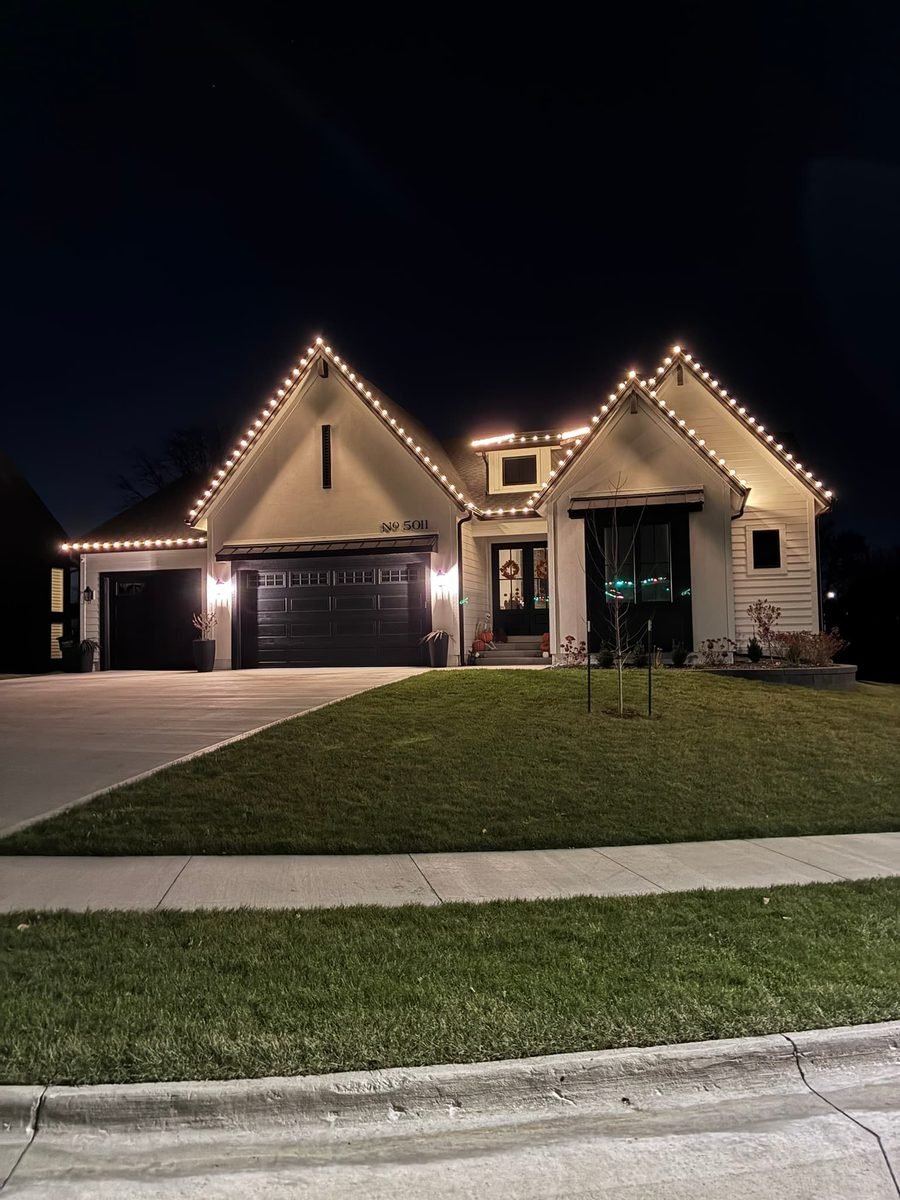
Shimmer & Shine Lights installs Christmas and holiday lights on homes in the Des Moines metro. The seasonal service uses C9 lights installed in the fall, fixes during the season, takedown in January and storage of the set until the next October.
That schedule keeps the lights out of the hottest part of the year and avoids leaving a seasonal set on the roofline indefinitely. It does not make an old or damaged strand last forever. Lights still need to be checked and replaced when their condition calls for it.
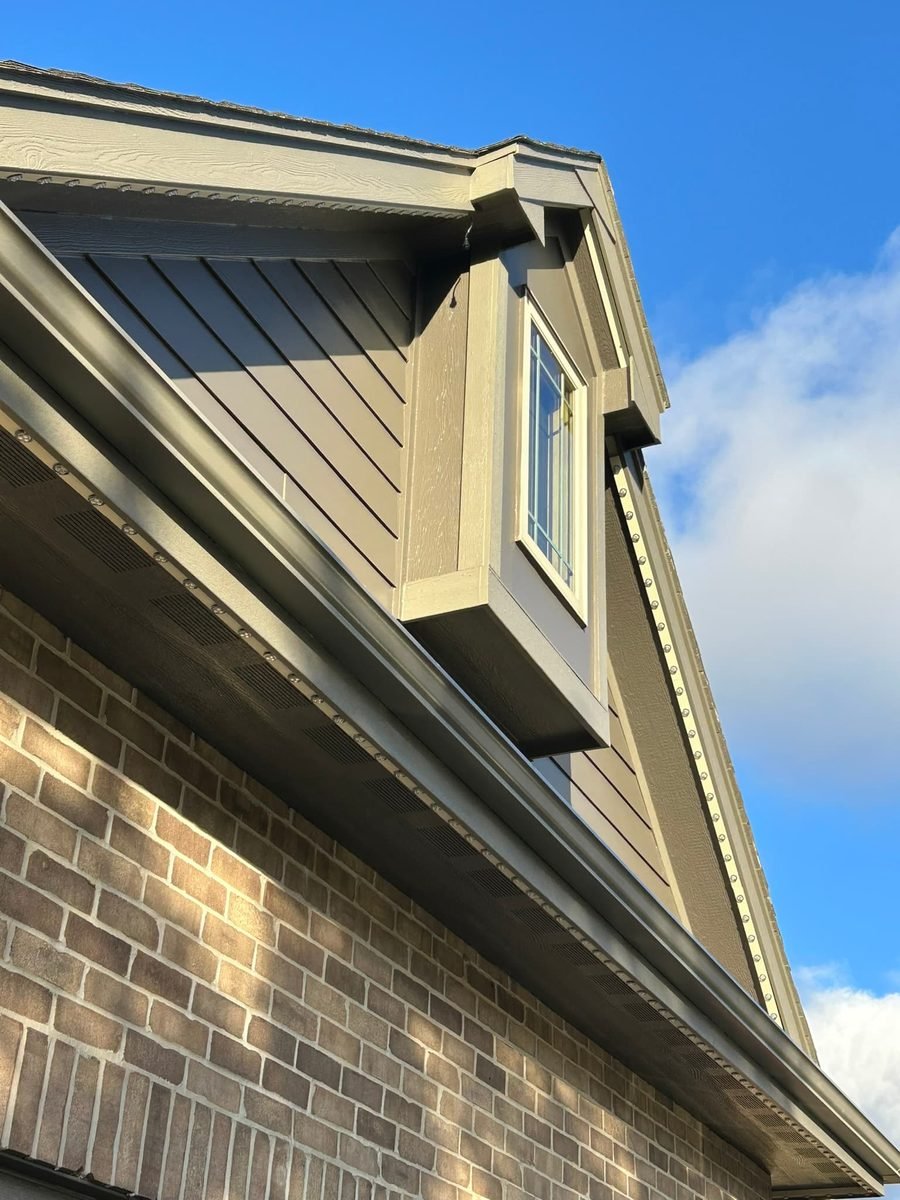
Clips attach without nails or screws wherever the roofline allows. The installation runs from existing exterior outlets. Customers choose which parts of the roofline are lit, so just the peaks or just the front is fine. Fewer lit sections can also mean fewer feet of wire and fewer connections to check each season.
One price covers measurement, lights cut to the house, the install, fixes all season, takedown in January and storage of the set until the next October. Colors cost the same: warm white, multicolor, red and white, or a custom mix. Details about the steps are on the Christmas light installation process page.
When should you replace lights instead of repair them?
Repair makes sense when the problem is limited and the set is otherwise in good condition. A replaceable bulb or fuse may be a small fix. A strand with widespread corrosion, brittle wire or several failed sections is a different matter.
Think about the time involved. If finding the fault takes longer than replacing the set, replacement may be the better choice. Also consider whether the lights will be installed in a visible place where one weak section will be noticeable.
If you hire a seasonal installer, ask what happens when lights fail. Shimmer & Shine Lights includes fixes all season as part of the service. The rate is based on roofline feet, not on how many light strands fail, and the service includes takedown and storage.
For the Des Moines metro, towns served include Adel, Ankeny, Clive, Dallas Center, Grimes, Johnston, Norwalk, Urbandale, Waukee, West Des Moines and Windsor Heights.
Questions people ask
Do LED Christmas lights last longer than incandescent lights?
Usually, yes. The U.S. Department of Energy says LED lights can last up to 25 times longer than incandescent bulbs. Outdoor use, storage and damage still determine how long a particular holiday strand lasts.
How many seasons should I expect from outdoor LED lights?
A practical planning range is about three to seven seasons for LED lights used seasonally and stored carefully. Some last longer. Replace them sooner if the wire, sockets or plug show damage.
Can I leave Christmas lights up all year?
You can, but seasonal lights receive more sun, weather and temperature exposure when they remain outside. Permanent track lighting is designed for year-round use and is a separate option from seasonal Christmas lights.
Are old Christmas lights worth storing?
Store them if the wire and sockets are in good condition. If they are brittle, cracked, corroded or repeatedly fail, replacing them before storage is usually the better choice.
When does Christmas light installation start in Iowa?
Shimmer & Shine Lights starts installs in mid-October and runs Monday through Saturday. Booked by November 14, 2026, the rate is $5 a foot with a $500 minimum. The rate steps up on November 15 and again on December 1.