Permanent Christmas lights are worth it if you want year-round architectural lighting, custom colors for every holiday, and zero ladder work for a decade or more. They are not worth it if you only want traditional warm white C9 bulbs for four weeks in December or if you want to avoid a higher initial investment.
Homeowners across the Des Moines metro ask this question every fall. The choice comes down to upfront cost, how you want your roofline to look during the day, and how often you plan to use the lights. Here is a direct breakdown comparing permanent track lighting with professional seasonal installation and doing the work yourself.
Upfront Cost vs Long-Term Investment
Cost is usually the first detail homeowners examine. Permanent lighting requires a higher initial outlay because you are purchasing durable hardware, aluminum track enclosures, and digital control components meant to stay on your home year-round.
Seasonal light installation spreads costs over individual years. For example, at Shimmer & Shine Lights, pricing is set by the foot of roofline. Booked by November 14, 2026, the rate is $5 a foot with a $500 minimum. The rate steps up on November 15 and again on December 1. A three-year agreement takes 20% off the next two seasons, while a two-year agreement takes 15% off the second season. One price covers measurement, lights cut to fit the house, installation, fixes all season, takedown in January, and storage of the set until the following October.
When comparing systems, consider how many years you plan to stay in your home:
- Short-term stays (1 to 3 years): Seasonal light installation or hanging your own lights usually makes more financial sense. You do not pay for permanent hardware you will leave behind.
- Long-term stays (5 to 15 years): Permanent lights often pay for themselves over time compared to paying for annual seasonal installation every winter.
- Small, simple layouts: For a small, easy single-story run, hanging your own lights is usually cheaper than hiring a service or putting up permanent track lighting. You can read more on this in our DIY vs hiring Christmas lights comparison.
If you want to review specific annual rates for custom fit seasonal displays, check our pricing guide.
Convenience and Safety on Winter Rooflines
Hanging lights in Iowa late in the year involves cold weather and ice. According to Iowa Weather, the average date for the first 32°F autumn freeze in Des Moines, Iowa, is October 6. Frost and freezing rain make gutters, ladders, and roof edges slippery early in the holiday decorating season.
Data from the U.S. Consumer Product Safety Commission indicates that an average of 160 decorating-related injuries occur each day during the holiday season, with roughly 40% to 50% caused by falls. Furthermore, CNN reports that an estimated 16,000 people head to the hospital for holiday-decor-related injuries every year across the United States.
Permanent lights eliminate ladder work entirely once installed. You press a button on your phone or set a schedule on an app. You never have to stand outside in freezing November wind to clip strands along eaves.
Seasonal light installation also eliminates your ladder work, because Tate and his small crew handle the hanging, maintenance, and removal. Installs start mid-October and run Monday through Saturday, booked by route so neighbors often share a day. The two weeks before Thanksgiving are the busiest. Takedown happens in January and is included with the seasonal service.
Appearance and Daytime Visibility
Appearance is where permanent lighting and seasonal lighting differ the most. Your choice depends on what look you want for your trim during the day and at night.
Daytime Look
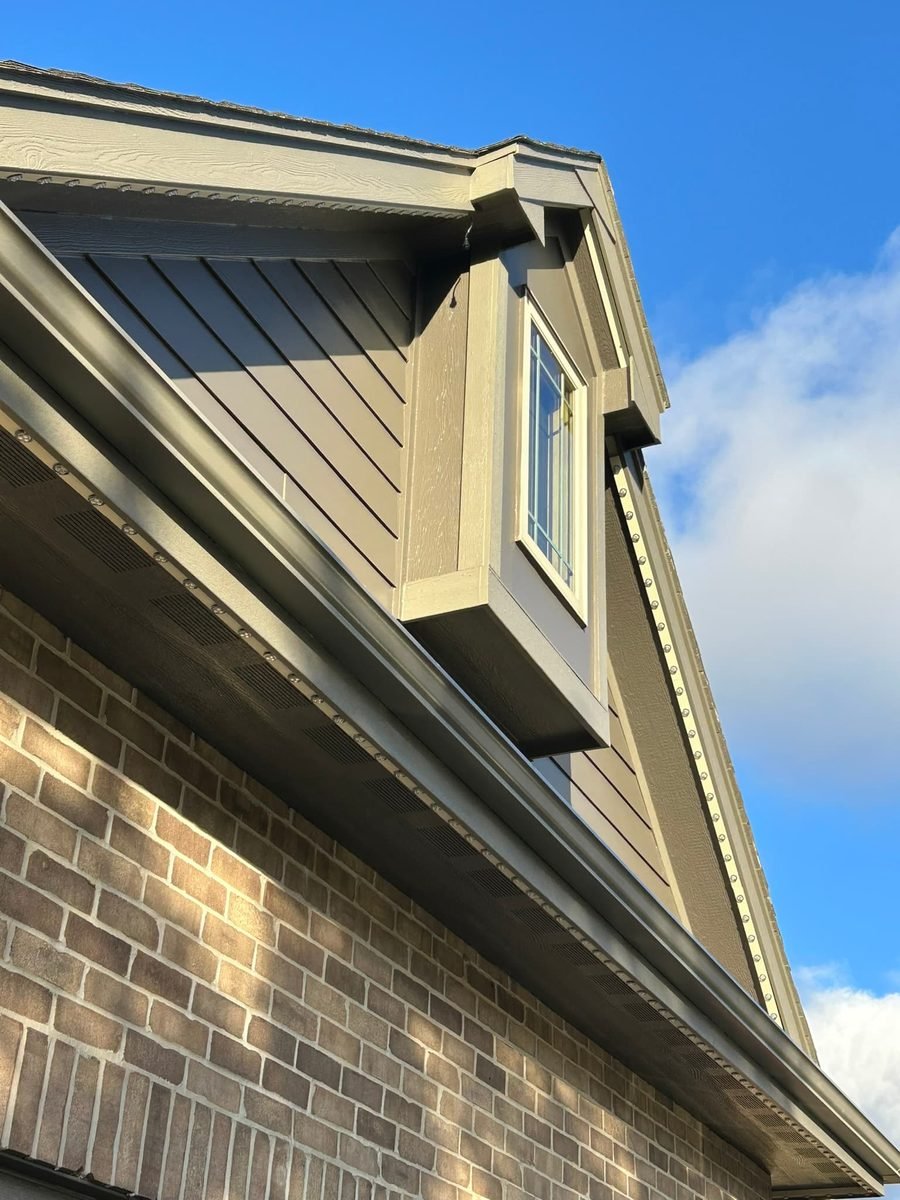
Permanent systems use an aluminum channel mounted along your fascia or soffit. The channel matches your gutter or trim color to conceal the wiring and bulbs. From the street during the day, the track looks like regular trim molding. You can learn more details on our permanent lights daytime look page.
Seasonal C9 lights are visible during November, December, and January. Clips attach without nails or screws wherever the roofline allows. In January, seasonal lights are removed entirely, leaving your roofline bare for the rest of the year.
Nighttime Look
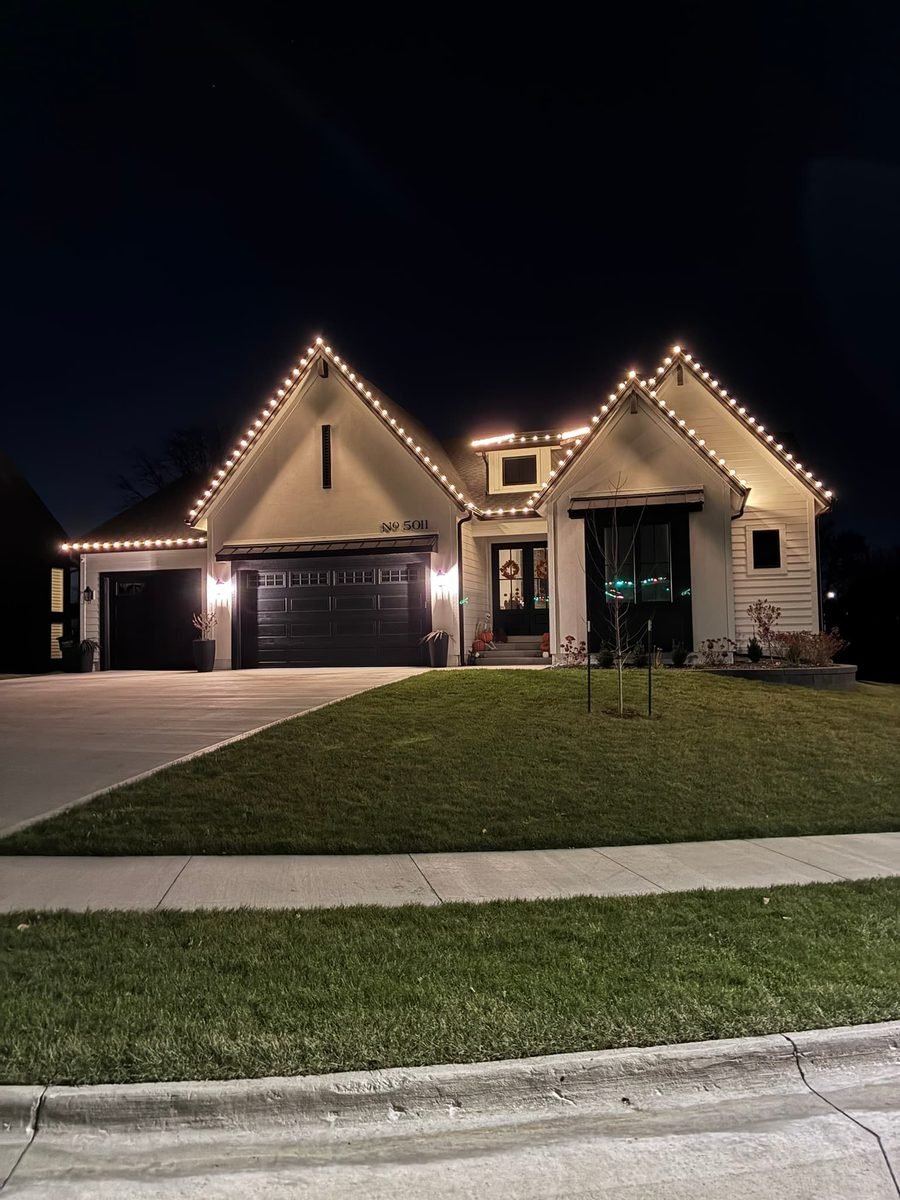
Permanent lights use small, downward-pointing LED diodes inside the track. They create an architectural wash of light down your walls and accent your gables. Seasonal C9 lights point outward or straight down along the fascia, creating bright, distinct points of light that define the perimeter of the roof.
Flexibility and Year-Round Use
Seasonal Christmas lights go up in the fall and come down in January. They are built for one time of year. Colors cost the same for seasonal installs: warm white, multicolor, red and white, or a custom mix. But once hung, those colors stay the same until January takedown.
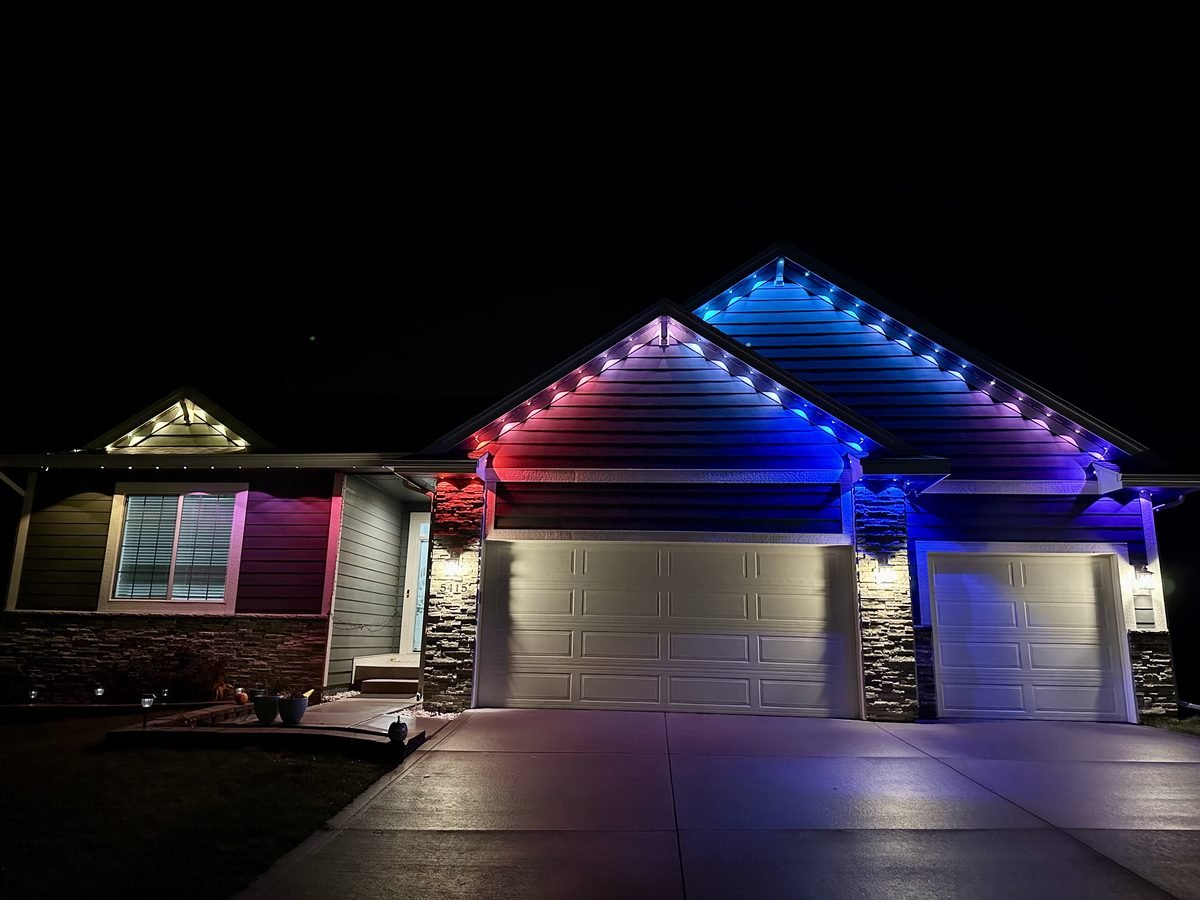
Permanent track lights give you daily flexibility. Because the system stays on your home, you can use it for events throughout the entire calendar year:
- Game days: Switch trim lights to local team colors on Saturday mornings.
- Holidays: Set red, white, and blue for the Fourth of July, green for St. Patrick's Day, or orange and purple for Halloween.
- Security and architectural accenting: Program warm white lights to turn on at low brightness every evening above your garage or front porch.
Energy consumption is low for both modern LED options. The U.S. Department of Energy notes that LED holiday light strands consume 70 percent less energy than conventional incandescent light strands. That efficiency keeps operating costs low whether you run permanent track LEDs or seasonal C9 LED lines.
Maintenance and Long-Term Durability
Permanent systems are designed for long-term exterior exposure. The aluminum track shields wire connections from sunlight, snow, wind, and squirrels. Individual LED diodes are sealed inside plastic housing to resist water intrusion. If a single light fails, individual diodes can usually be swapped without tearing down the track.
Seasonal systems suffer wear from being put up, taken down, packed into totes, and stored in hot attics or garages every year. With a professional service like Shimmer & Shine Lights, maintenance is included. Tate fixes issues all season long if a bulb goes out or a windstorm dislodges a clip. After January removal, Shimmer & Shine Lights stores the custom-cut set until next October.
Comparing Your Options
| Feature | Permanent Track Lighting | Professional Seasonal Lights | DIY Seasonal Lights |
|---|---|---|---|
| Upfront Cost | Higher initial investment | Moderate annual cost | Lowest initial cost |
| Year-Round Use | Yes (game days, holidays, security) | No (Christmas season only) | No (Christmas season only) |
| Daytime Appearance | Color-matched track along trim | Visible bulbs in winter, bare roof rest of year | Visible bulbs and clips in winter |
| Ladder Work | None after installation | None for the homeowner | Required twice a year |
| Color Changing | Instant via smartphone app | Fixed choice for the season | Fixed choice based on purchased strands |
| Maintenance | Component swaps as needed | Included with seasonal agreement | Self-repaired by homeowner |
Which Option Fits Your Home?
Choose permanent lights if:
- You plan to live in your home for several years.
- You want accent lighting for other holidays, game days, and dark winter evenings.
- You want a clean daytime look with no visible bulbs hanging off eaves.
- You prefer a single setup rather than scheduling annual hanging and removal.
Choose seasonal lights if:
- You prefer the traditional, bold look of large C9 bulbs standing along your roofline.
- You only care about lighting your house from Thanksgiving to New Year's Day.
- You do not want aluminum track installed on your fascia or soffits.
- You prefer to spread your costs out year by year. You can explore this option on our seasonal Christmas lights page.
Shimmer & Shine Lights installs Christmas and holiday lights on homes in the Des Moines metro. Des Moines area towns served include Adel, Ankeny, Clive, Dallas Center, Grimes, Johnston, Norwalk, Urbandale, Waukee, West Des Moines, and Windsor Heights.
If you want year-round accent track lighting, learn more on our permanent lights page.
Questions people ask
Do permanent lights look bulky during the day?
No. Permanent track lighting is mounted inside an aluminum channel painted to match your soffit or trim. From the street, it looks like standard decorative channel or soffit trim.
Can I choose which parts of my roof get lit?
Yes. Customers choose which parts of the roofline are lit for both seasonal and permanent installations. Lighting just the front gables or main peak is fine.
How do I get an accurate cost estimate for my home?
For seasonal lighting, send your address through our website or text Tate. Tate measures the roofline using satellite imagery and texts back a ballpark price, usually the same day. Nobody comes to the house for that step. A firm price comes after an in-person measurement, written into a service agreement signed before anything goes up. A signed price is held even if rates later rise. No deposit is required normally, and payment is due when installation is finished via cash, check, card, Venmo, or Cash App.
What happens if a seasonal light bulb goes out during December?
Shimmer & Shine Lights covers fixes all season long. One seasonal price covers measurement, custom-cut lights, installation, seasonal repairs, January takedown, and storage until the next fall.
Request your free estimate by filling out the simple form at our contact page or by texting Tate at 515-585-9079 any day from 8am to 7pm.