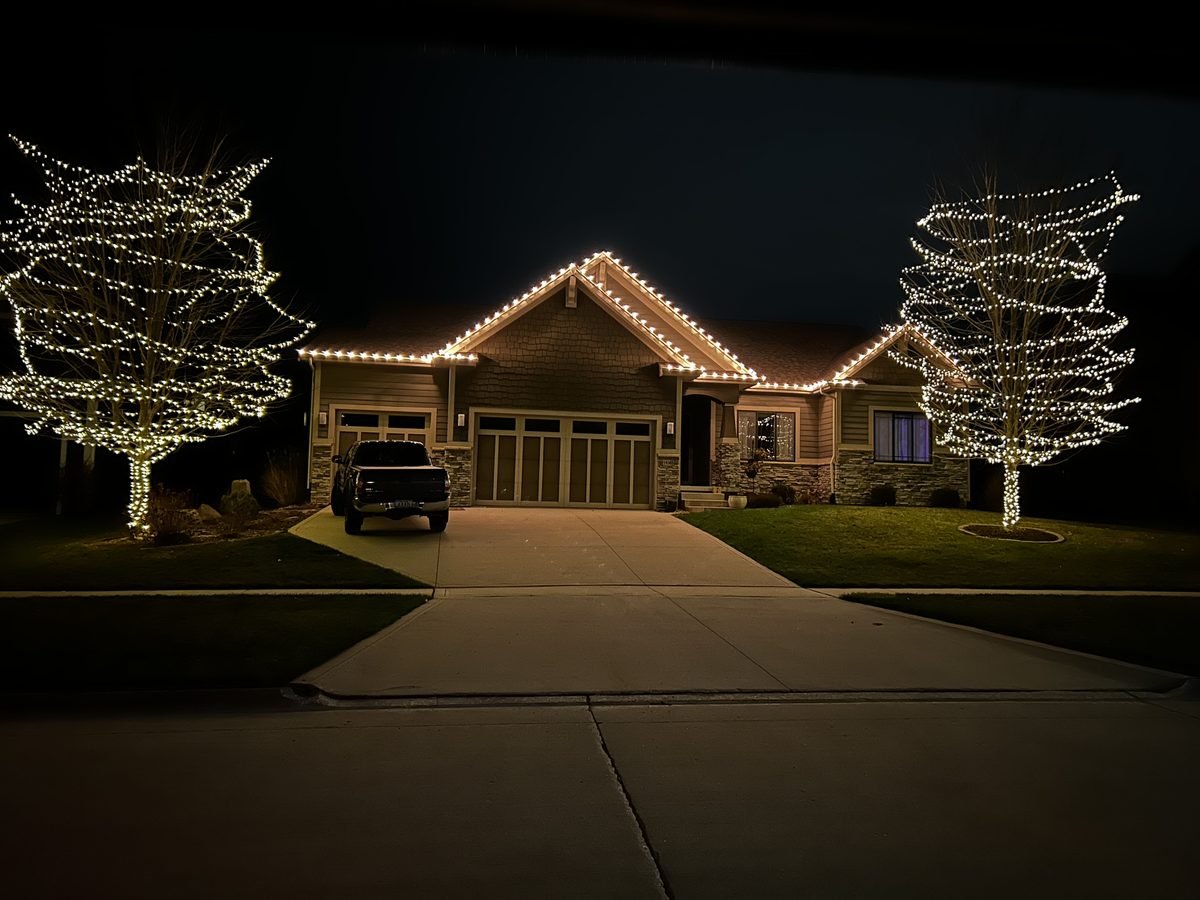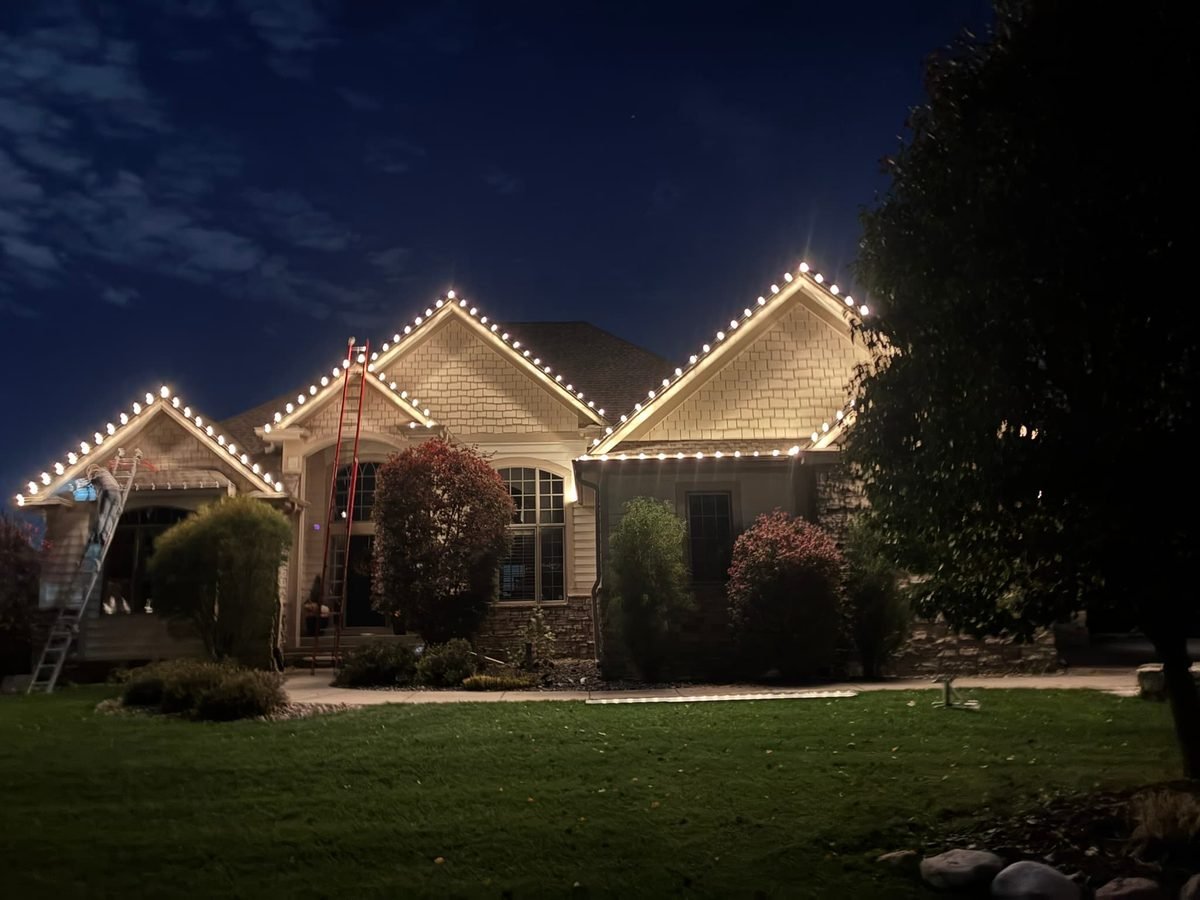
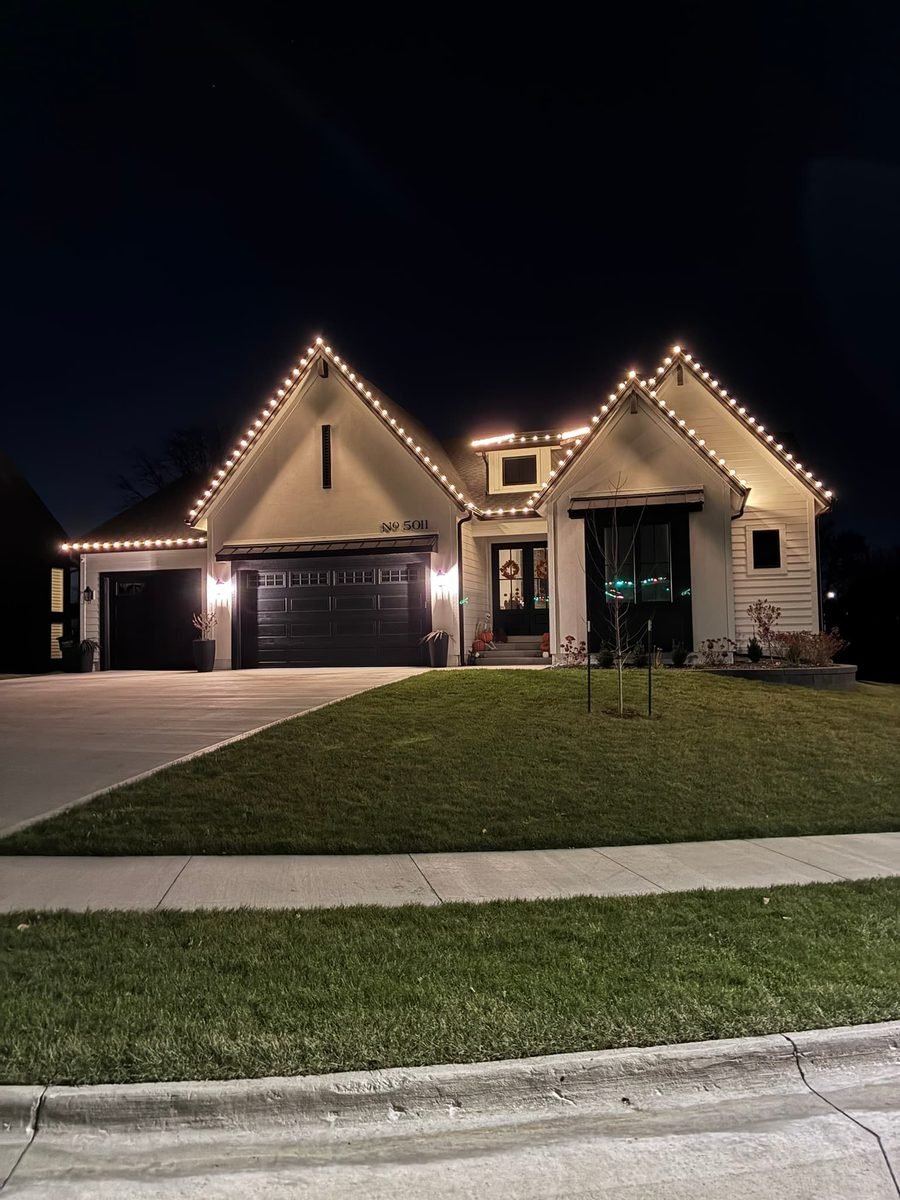
Christmas lights on a roofline work best when the design follows the house instead of covering every possible edge. The main decisions are which roof sections to light, how the clips will attach, how the lights will connect to an existing exterior outlet, and how the setup will handle Iowa weather.
A small, easy single-story run is usually cheaper to hang yourself. For a taller house, a long roofline, or a design that needs custom cuts and seasonal service, hiring an installer may make more sense. Here is what to know before choosing either option.
Start with the roofline design
Roofline lighting means following the visible edges of the home. That can include the front eaves, peaks, gable edges, dormers, garage roof, porch roof, or other sections that face the street.
You do not have to light every part of the roof. Many homeowners choose just the front eaves or just the peaks. That keeps the design simpler and can reduce the amount of ladder work, lights, and attachment points.
Choose the sections before measuring
Walk around the property from the street and decide which roof sections should be visible at night. A few common choices are:
- Front only: Lights follow the eaves and peaks facing the street.
- Peaks only: Lights outline gables and other high points.
- Front eaves and garage: The main roofline and garage receive matching lights.
- Full visible roofline: More sides of the home are included, subject to access and attachment conditions.
Symmetry matters. If one side of the front roof is lit, consider whether the other side should match. Also think about where the light run starts and ends. A clean end point is easier to plan than a loose tail near a corner.
Measure the linear feet
Pricing for a seasonal installation is based on the number of feet of roofline. The measurement should include only the sections you want lit. Peaks, corners, garage edges, and changes in roof height can affect the total.
Shimmer & Shine Lights can provide a free ballpark estimate from satellite imagery. Send the address through the estimate form or text 515-585-9079. Tate measures the roofline from above and texts back a ballpark, usually the same day. Nobody comes to the house for that first estimate.
The firm price comes after an in-person measurement. It is written into a service agreement before anything goes up. That signed price is held even if rates rise later.
Pick a light style and color
The light color changes how the roofline reads from the street. Warm white gives one consistent color. Multicolor adds several colors across the line. Red and white keeps the palette limited. A custom mix can use selected colors in specific sections.
At Shimmer & Shine Lights, warm white, multicolor, red and white, and a custom mix cost the same. The choice is about the look and the sections you want lit, not a different color charge.
LEDs are common for outdoor holiday displays. The U.S. Department of Energy says LEDs use up to 90% less energy and last up to 25 times longer than traditional incandescent bulbs. If you already own lights, check the set before planning around it. The color, bulb size, spacing, and condition all affect the finished line.
How roofline lights attach
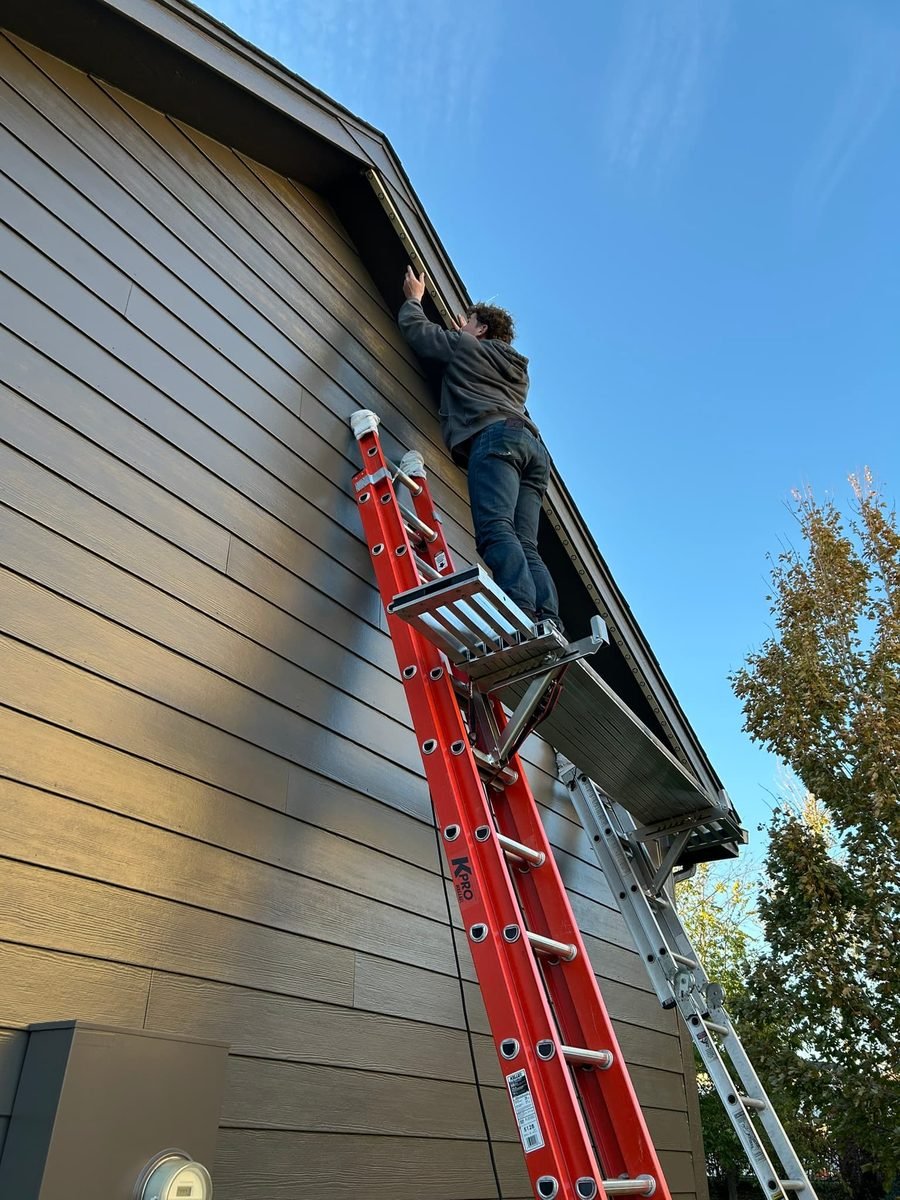
Most seasonal roofline installations use clips rather than nails or screws. Clips attach without nails or screws wherever the roofline allows. The exact attachment method depends on the shape and accessible edge of the house.
This is a method, not a promise about the condition of a particular roof, gutter, fascia, shingle, or paint. A roofline may have sections where a normal clip does not fit well. That is one reason an in-person measurement matters before the firm price is written.
Keep the line even
Clips should be placed so the bulbs follow a steady line around the edge. Uneven spacing can make a roofline look wavy from the street. Corners and peaks need extra planning because the light line changes direction.
Do not pull the wire tight enough to strain the sockets or connections. Leave the amount of slack called for by the light set's instructions. The line should sit neatly without forcing it against an edge that does not accept the clip.
Do not use nails or staples as a shortcut
Nails and staples can put holes through materials or press against the wire. They also make takedown harder. If a section does not accept a clip, stop and reassess the route instead of forcing the attachment.
For a do-it-yourself project, read the light and clip instructions first. Work from a stable setup, and do not climb when the roof, ladder, or ground is wet, icy, or snow covered. The Centers for Disease Control and Prevention recorded an estimated 17,465 fall injuries treated in emergency departments during 2000–2003 from holiday decorating or related activities, averaging 5,822 per year. The roof and ladder safety guide covers why this part of the work deserves the most attention.
Electrical safety starts with the existing outlet
A seasonal roofline installation runs from existing exterior outlets. The lights should be planned so the connection point is practical and the wire route does not create a trip hazard.
Before using a light set, inspect it. The Consumer Product Safety Commission says holiday light sets should be checked for broken or cracked sockets, frayed or bare wires, and loose connections. If you find damage, do not use that set.
Follow the manufacturer's instructions for the light set. Keep connections arranged as directed, and do not make changes to the home's electrical system as part of a light-hanging project. Questions about wiring, breakers, amperage, or whether a circuit can take the load belong to an electrician, not to a roofline lighting plan.
For an installation quote, the important information is where the existing exterior outlets are and which roof sections you want lit. Tate can plan the light run around that information. Electrical work beyond the light installation is outside that answer.
Plan for Iowa weather
Des Moines weather can change quickly during the holiday season. A roofline display needs a plan for cold temperatures, wind, snow, ice, and wet conditions.
Schedule before winter conditions become difficult
The first freeze in Des Moines typically arrives around October 20, according to Covefix's Des Moines freeze-date guide. That does not mean every installation has to happen before that date. It does mean that outdoor work becomes less predictable as the season moves on.
Shimmer & Shine Lights starts installations in mid-October and works Monday through Saturday. Jobs are booked by route, so neighbors often share an installation day. The two weeks before Thanksgiving are the busiest. If being lit by Thanksgiving matters, earlier booking gives more room for weather and scheduling changes.
Inspect after weather
After strong wind or heavy snow, look from the ground for a line that has shifted, a hanging section, or a dark area. Do not climb onto an icy roof to correct it. If the display is part of a seasonal service agreement with Shimmer & Shine Lights, fixes are included all season.
Snow and ice can add weight to a light line and make ladder work more difficult. Do not pull on a buried or frozen wire. If a connection is wet or damaged, stop using the affected set and follow the manufacturer's instructions.
Use lights intended for the conditions
Use outdoor light sets as directed by the manufacturer. Check the sockets, wires, plugs, and connections before installation and again if the display has been outside for several weeks. A set that was stored poorly may have damage before it ever reaches the roofline.
Weather protection is also about takedown. Seasonal lights are not meant to stay up indefinitely. Shimmer & Shine Lights takes displays down in January and stores the set until the next October. Customers receive a reminder text before installation and before takedown.
Do it yourself or hire the installation
For a small, easy single-story run, doing it yourself is usually cheaper. It may be the right choice if you already have suitable lights, the roofline is easy to reach, and you are comfortable handling the ladder work and winter takedown.
Hiring can make more sense when the house has multiple peaks, a long roofline, difficult access, or a design that needs lights cut to the house. It can also help if you do not want to store the set, repair sections during the season, or climb again in January.
With Shimmer & Shine Lights, one price covers measurement, lights cut to the house, installation, fixes all season, January takedown, and storage until the next October. The first season is full price. A three-year agreement takes 20% off the next two seasons. A two-year agreement takes 15% off the second season.
For bookings made by November 30, 2026, the rate is $5.50 per foot with a $500 minimum. The rate went up on November 15 and goes up again on December 1. See the current roofline pricing details for how the measurement and agreement work.
What the installation process looks like
- Request a ballpark: Send the address through the form or text 515-585-9079. Tate measures from satellite imagery and texts back, usually the same day.
- Choose the design: Decide whether you want the front, peaks, garage, or another portion of the roofline lit. Choose warm white, multicolor, red and white, or a custom mix.
- Schedule the measurement: Tate measures in person before the firm price is set.
- Sign the agreement: The price and service details are written into an agreement before installation.
- Install the lights: Clips attach without nails or screws wherever the roofline allows. The run connects to existing exterior outlets.
- Maintain and remove: Fixes are included all season. Takedown happens in January, followed by storage until next October.
The full Christmas light installation process explains these steps in order.
Des Moines metro service area
Shimmer & Shine Lights installs Christmas and holiday lights on homes in the Des Moines metro. Service includes Adel, most of Ankeny except the far east side, Clive, Dallas Center, Grimes, Johnston, Norwalk, Urbandale, Waukee, West Des Moines, and Windsor Heights.
Seasonal roofline lights are installed in the fall, fixed during the season, taken down in January, and stored until the next October. Permanent, year-round track lighting is also available through the permanent lights page. That is a different type of project than seasonal Christmas lights on a roofline.
Questions people ask
Can I light only the peaks or only the front?
Yes. Customers choose which parts of the roofline are lit. Just the peaks or just the front is fine, as long as the selected sections can be measured and reached for installation.
Will clips work on every roofline?
No method should be assumed to fit every section of every house. Clips attach without nails or screws wherever the roofline allows. An in-person measurement identifies the sections that can be included in the firm plan.
What should I do if a bulb or wire is damaged?
Stop using a damaged light set and follow the manufacturer's instructions. The Consumer Product Safety Commission recommends checking for cracked sockets, frayed or bare wires, and loose connections. For an installed seasonal display from Shimmer & Shine Lights, fixes are included all season.
When should I book roofline lights in Des Moines?
Installations start in mid-October, and the two weeks before Thanksgiving are the busiest. Booked by November 30, 2026, the rate is $5.50 per foot with a $500 minimum. The rate goes up again on December 1.